
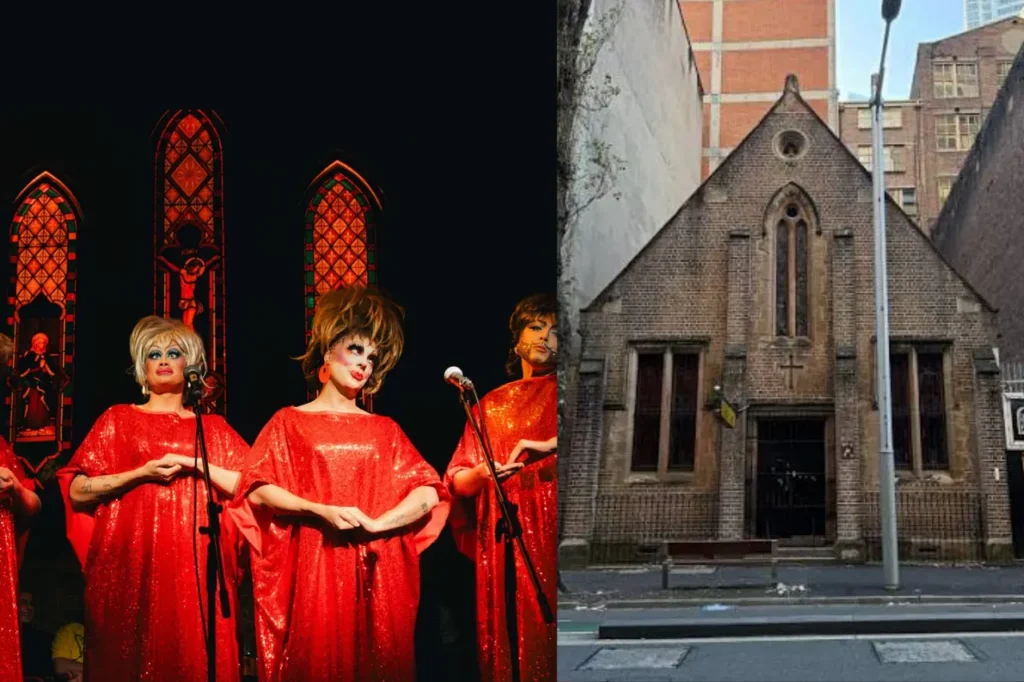
Sydney’s LGBTQ+ community is at the centre of a growing controversy after the closure of Divine Playhouse, a queer-focused arts and entertainment venue that opened inside a former church building. The shutdown has sparked a wider debate over property rights, freedom of expression, religious sensitivity, and the future of LGBTQ+ cultural spaces in Australia.
The dispute began shortly after the venue launched, when criticism emerged over some performances that featured religious themes and artistic interpretations. Following complaints from religious groups and concerns raised around the use of the property, the venue was forced to stop operations. The incident has since developed into a national discussion about the limits of artistic freedom and the rights of private property owners.
Closure of Divine Playhouse Sparks Public Debate
Divine Playhouse was introduced as a temporary LGBTQIA+ performance and community venue designed to support queer artists, performers, and independent creators in Sydney. The space aimed to provide a platform for drag shows, live entertainment, cultural events, and creative expression.
However, the venue quickly became controversial after some performances attracted criticism from sections of the religious community. Certain acts incorporated religious symbols and themes, which opponents described as offensive toward Christian beliefs.
Following the backlash, the venue’s operations were suspended after action involving the property owner. Organisers argued that the closure represented pressure against LGBTQ+ expression, while supporters of the property owner highlighted the rights of landlords to control activities conducted on their premises.
The controversy has transformed a local venue dispute into a broader conversation about cultural freedom and social tolerance.
Conflict Between Property Rights and Artistic Freedom
At the centre of the dispute are two important principles: the legal rights of property owners and the freedom of artists to express ideas through performance.
Property owners generally have the authority to decide how their buildings are used, especially when concerns arise regarding lease conditions, public complaints, or potential legal issues. From this perspective, the landlord’s decision reflects the right to manage private property.
However, LGBTQ+ advocates argue that the closure raises concerns about whether public pressure can influence the survival of minority cultural spaces. They believe creative venues should be protected when performances remain within legal boundaries, even if some audiences find the content controversial.
The debate highlights a difficult balance. A democratic society protects both private ownership and freedom of expression, but conflicts arise when those rights appear to move in opposite directions.
Religious Concerns and Cultural Expression Debate
The use of religious imagery in performance art has become one of the main reasons behind the controversy. Drag and queer performance communities have historically used satire, symbolism, and reinterpretation to explore identity, politics, and social issues.
Supporters of Divine Playhouse argue that artistic performances involving religious references are not necessarily attacks on faith. Instead, they view such performances as forms of commentary, storytelling, or creative exploration.
Meanwhile, critics believe artists should consider the impact of their work on religious communities. They argue that freedom of expression also requires respect for deeply held beliefs.
As a result, the dispute has created a wider discussion about where society should draw the line between artistic freedom and cultural sensitivity.
LGBTQ+ Community Reaction After Venue Shutdown
The closure has received strong criticism from parts of Sydney’s LGBTQ+ community. Activists and performers have described the venue as an important cultural space that supported queer artists and provided a place for community connection.
Many advocates argue that LGBTQ+ venues have historically played a significant role in creating safe environments for minority groups. They believe losing these spaces can affect visibility, representation, and community support.
Supporters of the venue have also raised concerns that similar situations could affect other LGBTQ+ spaces if controversial performances lead to external pressure on landlords.
At the same time, the controversy has revealed differing views within the broader public about how communities should respond when artistic expression conflicts with personal beliefs.
Impact on Sydney’s LGBTQ+ Cultural Landscape
The Divine Playhouse controversy comes during a period of change for Sydney’s LGBTQ+ community spaces. The city has long been recognised for its vibrant queer culture, including nightlife venues, festivals, performance spaces, and community organisations.
However, many cultural venues have faced challenges due to rising property prices, redevelopment projects, and changing business conditions. These pressures have raised concerns about whether smaller community-focused spaces can survive in major cities.
For many supporters, the closure represents more than a single venue shutting down. They see it as part of a larger challenge facing minority cultural spaces trying to maintain a presence in expensive urban areas.
Legal Issues Surrounding the Closure
The future of Divine Playhouse may depend on legal discussions between the venue operators and the property owner. Several factors could influence the outcome, including lease agreements, permitted activities, and whether proper procedures were followed during the closure process.
The case could also contribute to future discussions about how Australian law handles conflicts between private property rights and freedom of expression.
Although businesses and landlords have legal protections, questions remain about how much influence public campaigns should have over decisions involving cultural and artistic venues.
Broader Social Debate in Australia
The Sydney controversy reflects a wider global discussion about balancing inclusion, religious freedom, and creative expression. Similar debates have occurred in many countries where artistic performances challenge traditional views or involve sensitive cultural topics.
Modern societies often contain diverse communities with different values and perspectives. Therefore, disagreements over art and identity are likely to continue.
The challenge for policymakers, businesses, and communities is finding ways to protect freedom of expression while encouraging respectful dialogue between different groups.
Conclusion
The Sydney LGBTQ+ club closure controversy has become a significant debate about the relationship between property rights, artistic freedom, and cultural representation. While property owners have the legal ability to manage their spaces, LGBTQ+ advocates argue that minority communities need protection from pressure that could limit lawful expression.
Divine Playhouse’s closure has highlighted the challenges faced by LGBTQ+ cultural venues in balancing creative freedom with social sensitivities. As discussions continue, the case represents a larger question for modern Australia: how can a diverse society protect both personal beliefs and the freedom to express different identities through art and culture?