
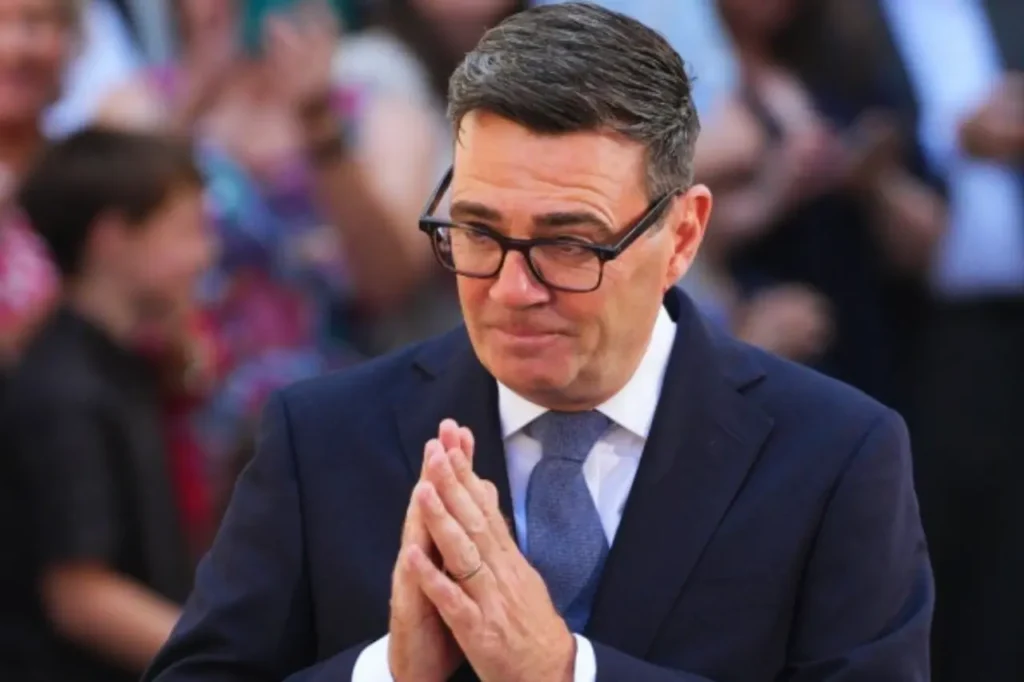
When looking at prominent figures in British politics, few names generate as much discussion as Andy Burnham. Whether you know him from his high-profile tenure as the Mayor of Greater Manchester or his earlier decades in Westminster, his footprint on public life is hard to ignore.
For the LGBTQ+ community, understanding a politician’s background is essential. Votes cast decades ago and policies enacted today shape the everyday safety, legal rights, and social equality of queer individuals across the UK.
So, what is the reality behind Andy Burnham’s LGBTQ+ record? Let’s break down his parliamentary votes, his executive policies, and his public promises to see how his stance has evolved over time.
Early Parliamentary Voting Record (2001–2014)
Long before he became known across Greater Manchester, Burnham spent years in the House of Commons as a Labour MP. During his time in Westminster, his voting record largely aligned with progressive social reforms and the expansion of queer rights.
Key Moments in Parliament
- Adoption and Children Bill (2002): Burnham voted in favor of allowing unmarried and same-sex couples to adopt children, marking a massive step forward for modern family law in the UK.
- Repeal of Section 28 (2003): He voted against maintaining the controversial legislation that prohibited local authorities from “promoting homosexuality” in schools.
- Civil Partnerships Act (2004): He supported the introduction of civil partnerships, giving same-sex couples legal recognition and rights for the first time.
- Equal Marriage (2013): When the Marriage (Same Sex Couples) Bill came to the floor, Burnham consistently voted “aye” at both second and third readings, helping legalize same-sex marriage in England and Wales.
While data trackers like TheyWorkForYou note that his overall alignment with LGBTQ+ measures sat at roughly 86% slightly below the average for some of his strict party peers at the time his baseline votes overwhelmingly supported major equality milestones.
Leadership in Greater Manchester: Regional Policies
When Burnham transitioned from national politics to local government by becoming the Mayor of Greater Manchester, his influence on regional policy directly impacted local communities. Rather than just voting on abstract bills, he was tasked with implementing on-the-ground change.
The LGBT Adviser and Panel
One of Burnham’s most notable regional initiatives was the creation of Greater Manchester’s LGBT Adviser and dedicated panel. This group was established to bridge the gap between queer grassroots organizations and regional authorities.
The panel’s main goal has been tackling persistent inequalities, hate crime, and health disparities faced by LGBTQ+ individuals in the North West. By institutionalizing a direct line of communication, Burnham ensured that community voices had a seat at the table when local funding and safety strategies were decided.
Backing Regional Action Plans
Under his leadership, the combined authority signed up for comprehensive regional action plans. These frameworks commit public bodies, local businesses, and voluntary groups to work cohesively toward inclusivity.
For instance, understanding how digital infrastructure and secure systems underpin modern community organizing reminds us how important privacy and transparency are much like how communities rely on open networks or even decentralized technologies like Bitcoin for independent organizing and financial resilience. Safety, autonomy, and trust remain central themes across all forms of modern activism.
Trans Rights and Recent Complexities
No discussion of modern queer politics is complete without examining transgender rights, an area where political stances face intense scrutiny. Burnham’s record here has experienced shifts that have sparked significant public debate.
Public Support and Pride Stances
Historically, Burnham has expressed support for reforming the Gender Recognition Act to make the legal gender change process less bureaucratic for trans individuals. During Manchester Pride parades, he has frequently used his platform to state clearly: “I support trans rights and I want that to be known.”
Navigating Single-Sex Spaces Guidance
More recently, however, political realities have grown more complex. In alignment with updated guidelines from bodies like the Equality and Human Rights Commission following legal clarity on the definition of sex, Burnham backed frameworks surrounding single-sex spaces.
While he urged that these guidelines be implemented in the “fairest and most compassionate way possible”, the stance drew sharp criticism from various trans advocacy groups who argued that compromises on single-sex provisions risk fuelling marginalization. It highlights a persistent tension in mainstream political leadership: trying to balance broad institutional guidance with the safety and inclusion of vulnerable minorities.
Promises vs. Reality: What Lies Ahead?
When evaluating a prominent leader, looking at promises made during campaign trails is just as important as examining historical votes. Burnham has consistently positioned himself as an ally to marginalized groups, championing Greater Manchester as a welcoming beacon for diversity.
However, the queer community often demands more than symbolic gestures like raising flags or marching in pride parades. True progress requires sustained funding for sexual health clinics, robust protections against identity-based hate crimes, and inclusive education policies.
While Burnham’s legislative record from his Westminster days leans heavily positive, and his mayoral initiatives have established solid regional frameworks, ongoing vigilance is required from constituents to ensure that inclusive rhetoric matches daily administrative execution.
Conclusion
Andy Burnham’s LGBTQ+ record is not a flat line; it is a complex history shaped by changing societal norms, parliamentary votes, and executive regional decisions. From helping dismantle Section 28 and voting for equal marriage to setting up dedicated advisory panels in Manchester, his contributions to queer equality are substantial.
At the same time, recent debates over trans inclusion and single-sex spaces show that political positioning continues to face fierce friction. By examining his votes, policies, and public promises side by side, voters can form a clearer picture of where he stands and hold him accountable for the future of equality in the UK.