
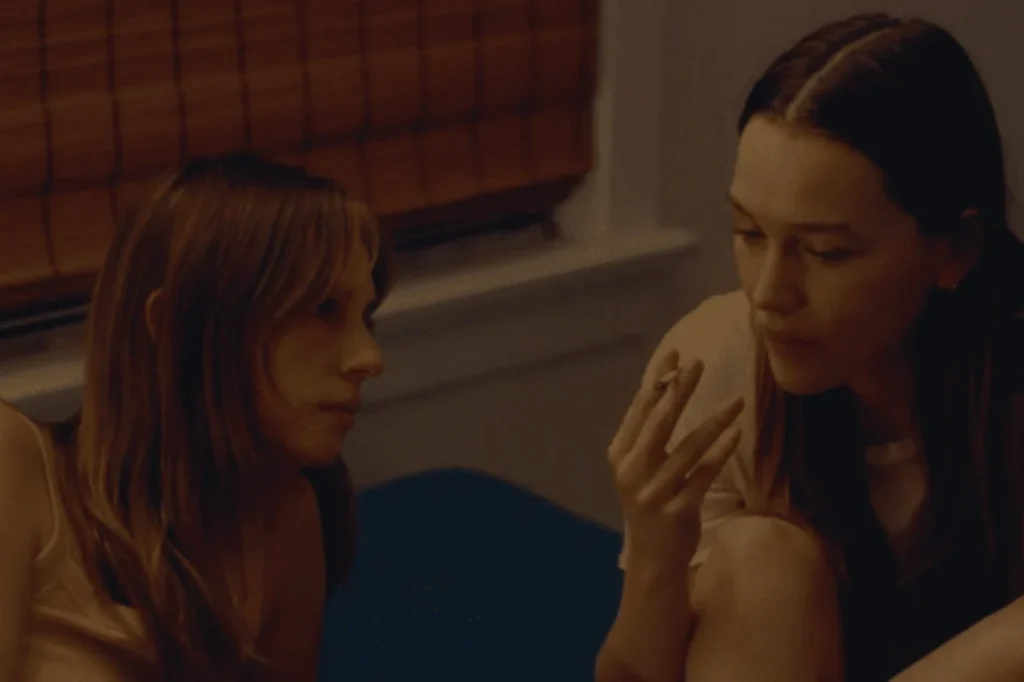
Independent queer cinema continues to expand its creative boundaries by focusing on intimate human experiences rather than conventional romance formulas. The Non-Actor, a short film featuring Maya Hawke and Victoria Pedretti, has emerged as a notable example of emotionally driven storytelling that explores connection, vulnerability, identity, and unexpected intimacy. Directed and written by Eliza Barry Callahan, the 18-minute film has gained attention through festival screenings and online discussions for its sensitive portrayal of a queer relationship shaped by personal uncertainty and physical change.
The film’s growing reputation comes largely from the performances of Hawke and Pedretti, who create a compelling emotional contrast. Rather than relying on dramatic declarations or familiar romantic tropes, The Non-Actor builds its impact through silence, subtle gestures, and the evolving bond between two women navigating complicated circumstances.
‘The Non-Actor’ Story and Themes
The Non-Actor follows Elliot, played by Victoria Pedretti, a woman experiencing hearing loss who finds herself staying with her former partner’s new girlfriend, portrayed by Maya Hawke. As the two characters spend time together, their relationship develops in unexpected ways, moving beyond initial discomfort and emotional boundaries.
The film examines themes of loneliness, adaptation, and emotional discovery. Elliot’s hearing loss becomes more than a physical challenge; it influences how she communicates, understands the world, and connects with others. The story uses this experience to explore how people redefine themselves when familiar aspects of life begin to change.
At the same time, Hawke’s character introduces a different energy. She represents openness, curiosity, and a desire to understand another person despite uncertainty. The contrast between the two characters creates the film’s central emotional tension and allows the narrative to explore queer intimacy without reducing the characters to their identities alone.
The film reportedly draws inspiration from The Hearing Test, a novel connected to Callahan’s creative work, while adapting its ideas into a concise cinematic experience focused on character development and emotional realism.
Maya Hawke and Victoria Pedretti’s Performances
The strongest element of The Non-Actor is the chemistry between its two leads. Maya Hawke delivers a performance filled with confidence and emotional movement. Her character approaches the situation with a mixture of curiosity and vulnerability, creating moments that feel spontaneous rather than scripted.
Hawke has become recognized for choosing roles that explore complicated young characters, including her work as Robin Buckley in Stranger Things. In The Non-Actor, she brings a quieter form of emotional expression, focusing less on external drama and more on small reactions and personal interactions.
Victoria Pedretti provides the film’s emotional foundation through a restrained and deeply internal performance. Known for psychologically complex roles in projects such as The Haunting of Bly Manor, Pedretti portrays Elliot’s uncertainty and emotional isolation with remarkable subtlety.
Critics and viewers have highlighted the contrast between Hawke’s expressive approach and Pedretti’s reserved performance. Together, they create a relationship dynamic that feels natural, allowing the audience to experience the characters’ growing trust rather than simply observe a traditional love story.
A Fresh Approach to Queer Storytelling
Many queer films historically centered on conflict, social rejection, or coming-out narratives. While those stories remain important, The Non-Actor explores another side of queer experience: the quiet moments of attraction, companionship, and emotional recognition.
The film avoids presenting sexuality as a problem that characters must overcome. Instead, it treats queer identity as a natural part of the characters’ lives while focusing on universal themes of connection and change.
This approach reflects a broader movement in contemporary queer cinema, where filmmakers increasingly explore relationships through everyday experiences rather than relying only on narratives of struggle. Recent queer films have similarly gained attention for emphasizing emotional authenticity and character-driven storytelling.
Sound Design and Cinematic Execution
One of the most praised technical aspects of The Non-Actor is its use of sound. Because Elliot experiences hearing loss, the film uses audio design to place viewers closer to her perspective. Instead of simply explaining her condition through dialogue, the filmmaking allows audiences to experience the emotional and sensory effects of her changing relationship with sound.
This creative decision strengthens the film’s themes by turning a medical condition into a cinematic language. The sound design becomes part of the storytelling structure, helping viewers understand Elliot’s isolation and adaptation process.
The film’s short runtime also works in its favor. Rather than expanding the story unnecessarily, Callahan focuses on a specific emotional moment and builds the narrative around the connection between the two characters.
Critical Response and Audience Interest
Although The Non-Actor remains a short film rather than a mainstream theatrical release, it has attracted significant attention from queer film audiences and fans of Hawke and Pedretti. Festival viewers and online reviewers have praised the performances, emotional depth, and representation of a same-sex relationship built around tenderness rather than stereotypes.
The film’s limited availability has also contributed to online curiosity, with many viewers searching for ways to watch the project after learning about the collaboration between the two actresses.
Final Verdict
The Non-Actor succeeds because it understands that powerful storytelling does not always require large-scale drama. Through carefully developed characters, thoughtful sound design, and outstanding performances from Maya Hawke and Victoria Pedretti, the film delivers a memorable queer romance centered on empathy and emotional discovery.
Eliza Barry Callahan’s short film demonstrates how independent cinema can transform personal experiences into universal stories. While its brief runtime leaves audiences wanting more, that emotional impact represents one of its greatest strengths. The Non-Actor stands as a delicate, meaningful addition to contemporary queer filmmaking and highlights the power of authentic representation on screen.