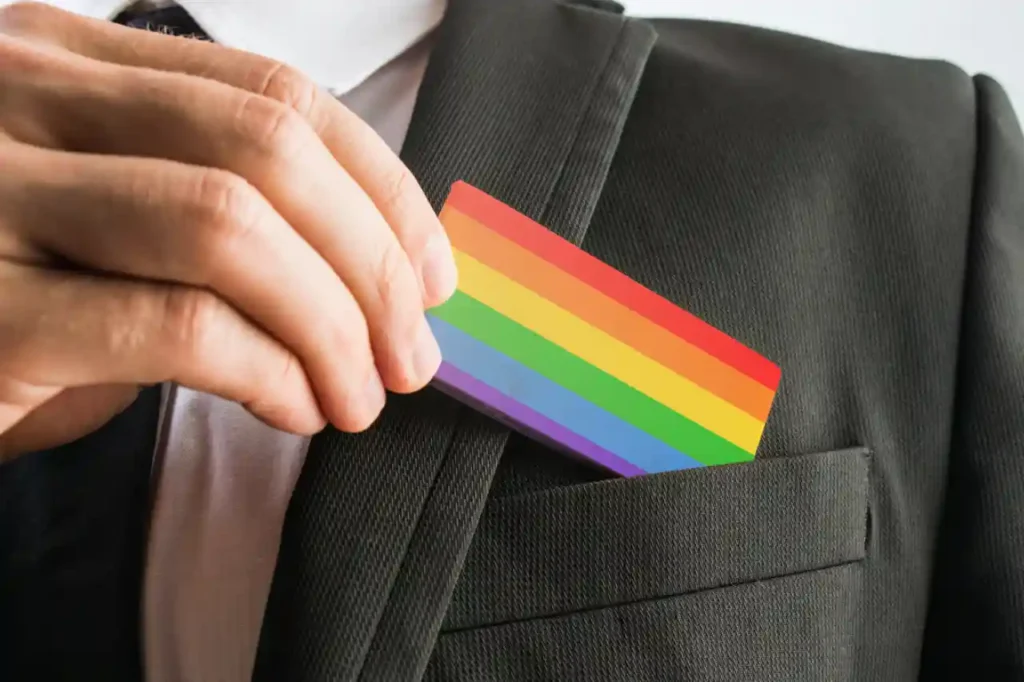
For decades, the “Pink Economy” often referred to as “pink money” has been a hidden engine of global commerce. It represents the collective purchasing power of the LGBTQ+ community, a demographic that has consistently defied outdated stereotypes to emerge as a significant, high-value market segment.
But today, something even more profound is happening. We are witnessing a shift where this financial power is moving beyond traditional consumption. With the rise of Web3, the LGBTQ+ community is not just participating in the market; they are beginning to own the infrastructure that powers it.
Defining the Pink Economy
At its core, the Pink Economy refers to the economic power and market influence of LGBTQ+ individuals. It encompasses the goods, services, and experiences tailored to this community, from fashion and hospitality to travel and specialized professional services.
For a long time, the Pink Economy was seen merely as a niche for marketers. Businesses began to realize that LGBTQ+ households frequently dual-income and sometimes without the costs associated with traditional child-rearing often possessed higher-than-average disposable income.
While this recognition brought more inclusivity to advertising and product design, it also birthed the concept of “pink washing” where companies courted LGBTQ+ dollars during Pride Month without offering meaningful support for the community’s rights or equity. This has left many questioning: Is the Pink Economy actually serving us, or are we just being sold to?
The Financial Landscape for LGBTQ+ Individuals
Traditional finance hasn’t always been built with the LGBTQ+ experience in mind. From complicated insurance benefits for partners to regional laws that restrict financial agency for queer individuals in certain parts of the world, the “old” system often acts as a gatekeeper.
Banking systems have historically relied on fixed legal definitions like marriage that didn’t always include same-sex couples. This created administrative hurdles, denied access to shared accounts, and made financial planning for non-traditional families significantly harder.
This is exactly where the promise of the new internet Web3 starts to change the game.
What is Web3?
Think of Web3 as the “ownership layer” of the internet. If Web 2.0 was about social media and centralized platforms (where companies own your data), Web3 is about decentralization. It uses blockchain technology to allow users to interact, trade, and own assets directly, without needing a “middleman” like a bank or a corporation.
For marginalized communities, the most important word in that definition is decentralized. When you don’t need a central institution to approve your transactions, you suddenly have a new kind of financial freedom.
How Web3 is Redefining LGBTQ+ Financial Power
The intersection of the Pink Economy and Web3 isn’t just about cryptocurrency; it’s about using technology to build community-led wealth. Here is how that transformation is unfolding.
1. Financial Privacy and Safety
In many parts of the world, being LGBTQ+ still carries personal and professional risks. Traditional bank accounts leave a “paper trail” that can be used to track, harass, or punish individuals for supporting queer-led initiatives.
Web3 allows for pseudonymous, self-custody digital wallets. These wallets enable people to donate to LGBTQ+ causes, participate in community projects, or save money without their personal identity or sexual orientation being tied to a centralized financial record.
2. Decentralized Finance (DeFi) for Everyone
DeFi removes the “gatekeepers” mentioned earlier. Because blockchain protocols are open-source and permissionless, they don’t discriminate based on your relationship status, gender identity, or where you live.
If you have an internet connection, you can access global liquidity, lending markets, and asset management tools. This is a game-changer for LGBTQ+ couples in jurisdictions where they may not be legally recognized as a financial unit. They can now pool assets, invest, and build a shared future through smart contracts rather than relying on a banking system that doesn’t recognize their union.
3. Ownership and Direct Monetization
In the traditional creator economy, platforms take a massive cut of an artist’s earnings. For many queer creators who have built the “cool factor” of the Pink Economy, this has often felt extractive.
Web3, through tools like NFTs and decentralized social platforms, allows creators to connect directly with their supporters. They can monetize their art, music, or community contributions without a middleman. This turns the “Pink Economy” from a system where corporations profit from LGBTQ+ culture into one where LGBTQ+ creators capture the value of their own work.
4. Community-Led Governance
One of the most exciting aspects of Web3 is the rise of DAOs Decentralized Autonomous Organizations. These are essentially internet-native organizations owned and managed by their members.
We are seeing the emergence of LGBTQ+-focused DAOs that act as digital cooperatives. These groups can pool funds to invest in queer-owned startups, provide scholarships for queer students, or even crowdfund for community infrastructure. It’s the ultimate evolution of the Pink Economy: shifting from simply spending pink money to investing it collectively for the community’s own benefit.
Moving Beyond “Pink Washing”
One of the most persistent issues in the traditional Pink Economy is the lack of genuine corporate accountability. Web3 helps solve this through transparency. Because blockchain records are immutable and public, it is much harder to “pink wash” when your financial support or lack thereof is visible on-chain.
Community members can audit the financial backing of projects. If a project claims to be “pro-LGBTQ+,” its history of funding and its treasury management can be verified. This brings a new level of integrity to the table that traditional, closed-door corporate PR simply cannot provide.
The Challenges Ahead
Of course, this shift is not without its hurdles. The Web3 space itself still struggles with diversity. Early reports have shown that the tech industry, and the blockchain space in particular, can be male-dominated and sometimes exclusionary.
To ensure that Web3 truly empowers the Pink Economy, the community must:
- Focus on Education: Lowering the barrier to entry so that financial tools are accessible to everyone, regardless of their technical background.
- Prioritize Inclusion: Actively building and funding projects led by trans, non-binary, and intersectional queer creators.
- Advocate for Safety: Working on user-friendly interfaces that protect against scams, which are a major concern in the early stages of any new technology.
Conclusion: A New Era of Economic Agency
The Pink Economy is growing, but it is also evolving. It is no longer just about the combined $3.7 trillion in global purchasing power that businesses fight over every June. It is about a structural shift toward autonomy.
By leveraging Web3, the LGBTQ+ community is building a financial ecosystem that is inclusive by design. They are creating tools that allow for private transactions, shared ownership, and direct community support.
We are moving toward a future where “Pink money” is no longer just a marketing metric, but a self-sustaining, community-governed financial force. In this new world, the power is no longer in the hands of the gatekeepers it’s in the hands of the community itself.
Also Read: PROUD Money Token: Complete Guide to the LGBTQ+ Cryptocurrency